
Skip to content
OptimaLegal

About

An Indian legal technology company.

OptimaLegal builds ALFRED, an AI research tool for Indian advocates. We started from one rule: every answer has to show where it came from, so you can check it before you rely on it.
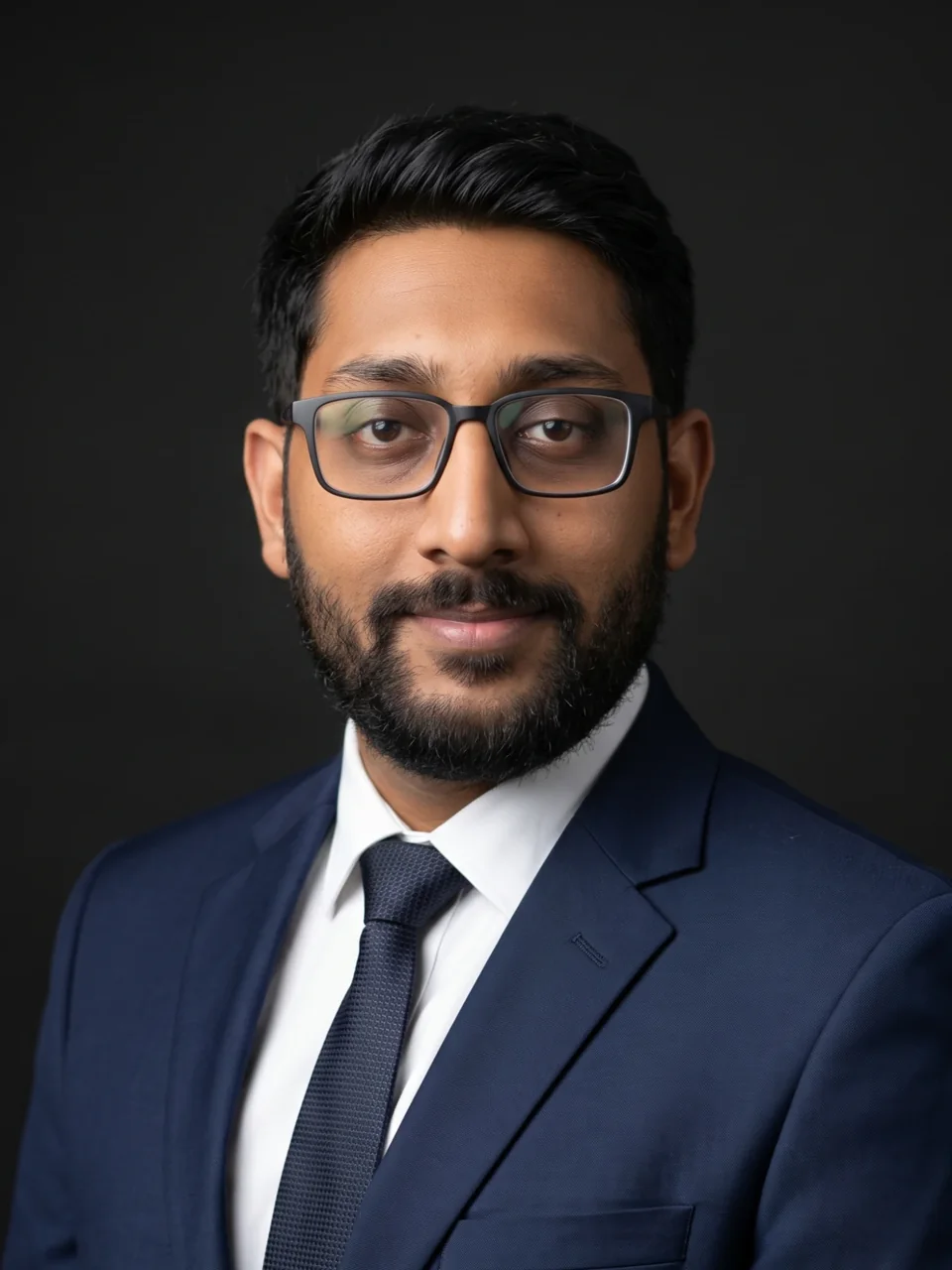
Siddhant Shrivastava

Siddhant Shrivastava

Founder and CEO, OptimaLegal

Founder

The founder and CEO behind ALFRED.

Siddhant Shrivastava founded OptimaLegal and primarily leads our R&D, while also setting the company's short- and long-term strategic vision. He has spent over two years studying how artificial intelligence can and cannot serve the legal profession. That work is the basis on which ALFRED was built, and on which it continues to evolve.

Alongside OptimaLegal, Mr. Shrivastava serves as a consultant to more than seven early-stage startups across a wide variety of markets, both emerging and traditional.

He has been described in articles as a polymathic mind, and spends his personal time writing essays on philosophy, theology, quantum mechanics, theoretical physics, history, sociology and more. When he is not at the office or writing, you can find him practising, and even teaching, martial arts.

“The law is perhaps the most human and social thing created by our species.”
From Artificialis Intelligentia

Areas of expertise

  • Technical frameworks for legal AI
  • Accountability and bias in AI systems
  • Regulation of AI systems
  • Professional responsibility in AI-assisted legal practice

Insights

Writing by Siddhant.

All essays
  1. 7 min read

    Why Lawyers Never Got a Bloomberg Terminal

    Lawyers had computer research before traders did. LEXIS, which grew out of a project the Ohio State Bar Association began in 1967, was released commercially in April 1973, and by 1979 it sat on lawyers' desks as a terminal called UBIQ. Bloomberg's first terminal arrived in December 1982. Yet the legal terminal never changed how lawyers worked the way Bloomberg's changed finance.

    Read the essay

  2. 8 min read

    The Abrogated Prototype

    Metrological Artifacts, Judicial Plurality, and the Benchmark Problem in Legal Intelligence

    For 130 years the kilogram was a metal cylinder in a vault outside Paris, Le Grand K. Because it defined the kilogram, it could never be weighed against anything. When its copies drifted apart, nobody could say whether the copies had moved or the original had. In 2018 the physicists abrogated the object and redefined the kilogram by a constant of nature.

    Read the essay

  3. 8 min read

    Stop Trying to Build a Robot Lawyer

    The lessons that a crippled monk has for Legal AI

    Almost a thousand years ago, the monk Eilmer of Malmesbury strapped wings to his arms and jumped from his abbey's tower. He flew for about fifteen seconds and broke both legs. Leonardo's ornithopters copied birds more carefully and still failed. Flight came only when George Cayley stopped imitating birds and broke flight into what it needs: a wing for lift, propulsion for thrust and a tail for control.

    Read the essay

Questions

About the company.

What does OptimaLegal do?
We build ALFRED, legal research software for Indian advocates. The company exists because of a specific belief about AI rather than a general enthusiasm for it.
What is that belief?
That current AI systems are badly suited to legal work, both technically and in how they are being deployed. Most of the category asks advocates to trust output they cannot check. We think that is the wrong trade, and the product is built around removing it.
Where are you based?
The Delhi NCR region, India.
How far along are you?
ALFRED is in alpha, with a demo at demo.optimalegal.in. The research the product is built on is published at optimalegal.in/research while it is still in draft.
Are you hiring?
No open roles right now. If you want to be considered when there are, send a CV to ceo@optimalegal.in.

See how ALFRED reasons.

Walk through real Supreme Court cases in the demo. On the login screen, choose “Use demo credentials” and you're in.